On this page (8 sections)
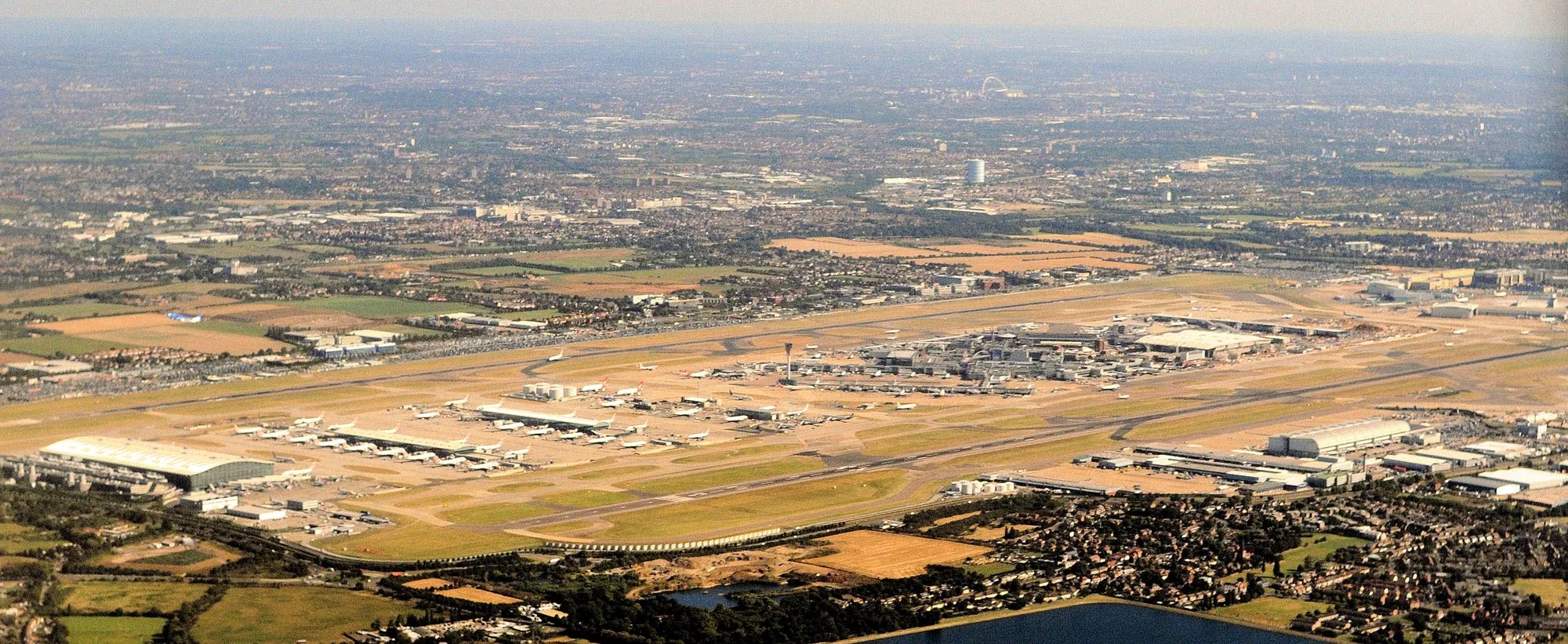
Heathrow's four terminals
Heathrow has four operating passenger terminals: Terminal 2, Terminal 3, Terminal 4, and Terminal 5. The Heathrow terminals are arranged primarily by airline alliance, with one alliance or one carrier anchoring each. T2 carries the Star Alliance roster. T3 carries most of the oneworld alliance plus Virgin Atlantic. T4 carries the SkyTeam alliance, alongside the Gulf and Asia long-haul names that sit outside the three main alliances. T5 is for British Airways and Iberia only. Your boarding pass and the airline's confirmation email both list the terminal; if either is unclear, the airlines at Heathrow page lists every carrier and where it flies from.
The numbering runs from 2 to 5 because Terminal 1, which sat between T2 and T3 in the central terminal area, closed to passengers on 29 June 2015 and has since been demolished. Most of its routes moved to T2 when the Queen's Terminal opened the year before, with the rest split across T3 and T5. Older guides that still mention five terminals at Heathrow are out of date.
Heathrow handled 84.5 million passengers in 2025, a record total, with T5 carrying the largest share at around 35 million and T4 the smallest, and the airport has run close to its permitted flight cap for years, the backdrop to the third-runway Heathrow expansion debate. The four terminals do not share airside space: connecting between two of them means a train, the free inter-terminal coach, or in the T2-to-T3 case a covered footbridge. Get the terminal right at booking and the rest follows.
Terminal 2
Terminal 2, branded the Queen's Terminal, is the Star Alliance hub at Heathrow. Around 25 carriers operate from the building, almost all of them Star Alliance members: Lufthansa, United Airlines, Air Canada, Singapore Airlines, ANA, Swiss, Austrian, Brussels Airlines, TAP Air Portugal, LOT Polish, Air China, Asiana, EVA Air, South African Airways, Egyptair, Turkish Airlines, SAS, Croatia Airlines, Avianca, and ITA Airways since its move into the alliance in 2026. A small group of non-aligned carriers also use T2: Aer Lingus (which joined oneworld in March 2025 but stayed put), Icelandair, Middle East Airlines, El Al, and Eurowings.
The current Terminal 2 building opened on 4 June 2014, replacing an older terminal of the same name and the demolished Queen's Building next door. It handles around 18.5 million passengers a year. The main building (T2A) holds check-in, security, and gates A1 to A26; the airside satellite (T2B) holds gates B31 to B49 and is reached by an 800-metre underground walkway with travellators, around 10 to 15 minutes on foot. Unlike T5, there is no transit train; the walk to T2B is part of the gate journey.
For the on-the-ground detail, see parking at Terminal 2, lounges in Terminal 2, Terminal 2 restaurants and bars, and the Terminal 2 map. If you have arrived at T2 in error and need to be at T3 instead, the covered walkway between the two arrivals halls takes about 10 minutes; for T4 or T5, the inter-terminal transfer page covers the trains and the free coach.
Terminal 3
Terminal 3 sits in the central terminal area next to T2 and is the home of most of the oneworld alliance at Heathrow plus Virgin Atlantic. The oneworld lineup at T3 is American Airlines, Cathay Pacific, Finnair, Japan Airlines, Qantas, Royal Jordanian, and SriLankan. Virgin Atlantic is the lead non-aligned long-haul carrier, with Delta Air Lines flying selected Heathrow routes from the same terminal under the Virgin and Delta transatlantic joint venture. Kenya Airways and Air Mauritius round out the list. The two anchors people most often look up are how to choose between Terminal 3 and Terminal 5 for a BA codeshare on American or Iberia: the airlines page shows which terminal each carrier actually departs from.
Terminal 3 first opened in November 1961 as the Oceanic Terminal and was renamed T3 in 1968. It has been rebuilt in stages since, most recently with a new check-in hall and the Virgin Upper Class Wing. T3 shares its rail station with T2, branded Heathrow Terminals 2 & 3, with all three rail services calling there: Heathrow Express direct from Paddington in 15 minutes, the Elizabeth Line direct from Paddington in around 30 minutes, and the Piccadilly Line from central London in 50 to 55 minutes.
For the rest of the detail, see parking at Terminal 3, lounges in Terminal 3, Terminal 3 restaurants and bars, and the Terminal 3 map. If you arrive at T3 and need T2, walk the covered footbridge; for T4 or T5, the inter-terminal transfer page covers the train and the free coach.
Terminal 4
Terminal 4 is the SkyTeam alliance hub at Heathrow plus a cluster of Gulf and Asia long-haul carriers that sit outside the three main alliances. The SkyTeam lineup at T4 is Air France, KLM, Korean Air, Saudia, China Eastern, China Southern, and Vietnam Airlines. The non-aligned carriers based here are Qatar Airways (its main UK hub), Etihad Airways, Malaysia Airlines, Royal Brunei, Royal Air Maroc, and Bulgaria Air. T4 is the smallest of the four operating Heathrow terminals by passenger volume and gate count.
Terminal 4 opened on 1 April 1986, closed during the pandemic in 2020, and reopened in June 2022 with Qatar Airways the first major carrier to return. It sits south of the central terminal area, separated from T2 and T3 by the main runway pair, with its own road approach from M25 junction 14 via the A3113 Airport Way and the Southern Perimeter Road. Heathrow Express does not stop at T4; this is the most common gotcha at the booking stage. Direct rail to T4 is by the Elizabeth Line (four trains an hour, around 35 minutes from Paddington) or the Piccadilly Line (every 10 to 15 minutes from central London). HEX passengers change at the central Heathrow station for the free Elizabeth Line shuttle, around 5 minutes.
For the rest of the detail, see parking at Terminal 4, lounges in Terminal 4, Terminal 4 restaurants and bars, and the Terminal 4 map. If you arrive at T4 and the flight is at T2, T3, or T5, the inter-terminal transfer page covers the airside coach and the rail options.
Terminal 5
Terminal 5 is the British Airways and Iberia base at Heathrow. Two airlines, no third. British Airways operates virtually all of its 180-plus Heathrow routes from T5, long-haul and short-haul. Iberia, BA's IAG sister carrier, runs Madrid plus onward connections from the same terminal. T5 carries the largest passenger share of the four operating terminals at around 35 million a year.
Terminal 5 opened on 27 March 2008 and sits on the western edge of the airport with its own station, its own road approach from M25 junction 14 via the dedicated T5 spur road, and the two airside satellite buildings T5B and T5C. The satellites are airside-only buildings reached by a free underground transit train from the airside concourse of the main building, every three to four minutes, with a three-minute journey time; short-haul BA flights to Europe often depart from one of the satellites and the gate number on the boarding pass tells you which. All three rail services serve T5 directly: Heathrow Express in 21 minutes from Paddington, the Elizabeth Line in around 27 minutes from Paddington, and the Piccadilly Line from central London.
For the rest of the detail, see parking at Terminal 5, lounges in Terminal 5, Terminal 5 restaurants and bars, and the Terminal 5 map. If you arrive at T5 in error, T5 sits on its own and has no walking link to any other terminal; the free Heathrow Express segment to the central station handles a T5-to-T2/T3 hop in six minutes, and the Elizabeth Line shuttle covers the same routes plus T4 (changing at the central station for T4 because the branches diverge east). The inter-terminal transfer page covers each route in detail.
Finding your terminal
Your terminal is on the boarding pass, on the airline's confirmation email, and on the airport's live departure board. If you have lost the booking and need to look it up, the airline-to-terminal mapping is on the airlines at Heathrow page and the quick lookup is at which terminal does my airline use. As a rule of thumb: BA and Iberia mean T5; American Airlines, Virgin Atlantic, Cathay Pacific, Japan Airlines, or Qantas mean T3; Lufthansa, United, Singapore, ANA, or Air Canada mean T2; Air France, KLM, Qatar, or Etihad mean T4. The Heathrow airport map shows where each building sits relative to the central area.
A handful of exceptions catch people out. Aer Lingus joined the oneworld alliance in March 2025 but stayed at T2 rather than moving to T3, so an Aer Lingus flight from Heathrow leaves from the Star Alliance terminal. Delta Air Lines is a SkyTeam member but operates selected Heathrow routes from T3 under its joint venture with Virgin Atlantic, not from the SkyTeam terminal. Air India, a Star Alliance carrier, moved from T4 to T2 in 2025, so it now uses the Star Alliance terminal. Airline-to-terminal moves are rare but do happen, so the live departure board on the day is the safer source when any doubt remains.
Moving between terminals
The four Heathrow terminals do not share airside space. A connection between two of them on a single ticket with through-checked bags uses the free airside Flight Connections coach, signposted from each arriving terminal with purple Flight Connections signs; the coach runs every 6 to 10 minutes and links all four terminals. Landside, the options vary by route, and all the in-airport rail and Heathrow Express segments between Heathrow stations are free when you tap in and out.
T2 to T3 is the only walking link at Heathrow. A covered underground walkway connects the two arrivals halls in about 10 minutes at a normal pace, step-free, with travellators on most of the route. Every other landside transfer needs transport. T2/T3 to T5 is fastest on the free Heathrow Express segment between the central station and T5, around six minutes, or on the Elizabeth Line. T2/T3 to T4 is the Elizabeth Line or the Piccadilly Line. T4 to T5 is the Piccadilly Line direct, calling at Hatton Cross between them, or a change at the central station for the Elizabeth Line: the two Elizabeth Line east branches run on different routes, so a direct T4-to-T5 service does not exist on the line.
For the full picture, including door-to-door bands by route and the British Airways recommended connection times, see the inter-terminal transfer page. The relative geography is on the Heathrow airport map.
At-a-glance comparison
The four operating terminals on a single row each. Lead carriers reflect the dominant alliance or carrier; rail services are the direct trains stopping at the terminal's own station or the shared central station.
| Terminal | Lead carriers | Rail services | Notable |
|---|---|---|---|
| Terminal 2 | Star Alliance (Lufthansa, United, Singapore, ANA) | HEX, Elizabeth, Piccadilly (central station) | Queen's Terminal, opened 2014; T2B satellite on foot |
| Terminal 3 | oneworld plus Virgin Atlantic (American, Cathay, JAL, Qantas) | HEX, Elizabeth, Piccadilly (central station) | Oldest in current use (1961), rebuilt in stages |
| Terminal 4 | SkyTeam plus Qatar, Etihad (Air France, KLM, Korean Air) | Elizabeth, Piccadilly (no Heathrow Express) | Smallest by volume; south of the runways |
| Terminal 5 | British Airways, Iberia | HEX, Elizabeth, Piccadilly (own station) | Largest by volume; T5B and T5C by transit train |
Heathrow Express does not stop at T4. The Elizabeth Line's two east branches run on different routes, so a direct T4-to-T5 service does not exist on the line and a change at the central T2/T3 station is needed. Travel between Heathrow stations is free on the Elizabeth Line, the Piccadilly Line, and the Heathrow Express airport-only segment when you tap in and out.