On this page (10 sections)
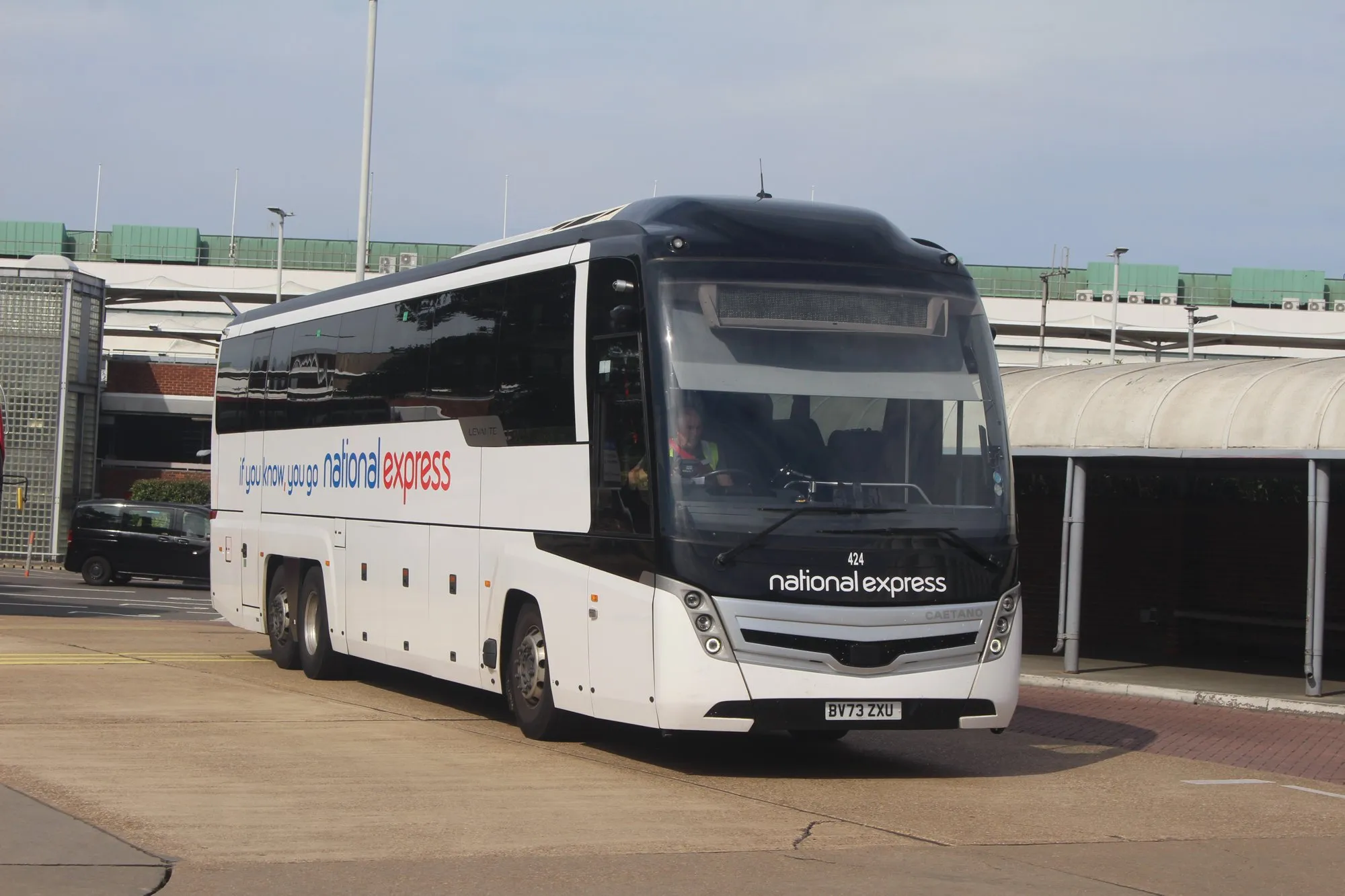
What 'coach to Heathrow' means
In British usage, coach means a long-distance scheduled service: reserved seats, a luggage hold underneath the vehicle, refreshment stops on longer routes, a ticket bought in advance. It is a separate category from the local TfL bus, which is the red double-decker covered on its own page. Both call at Heathrow, but they solve different problems: the local bus is for a £1.75 hop to Hounslow, the coach is for a £25 trip from Manchester.
The page also does not cover the dedicated Gatwick to Heathrow shuttle, which has enough specific detail (frequencies, connection times, fare structure) to need its own page. Hotel shuttle "Hoppa" buses, which run between the airport and selected nearby hotels, are also separate; they are usually paid services operated by hotel groups, not the long-distance coach operators below.
What this page is for: coach travel from a UK city to Heathrow, or from Heathrow to a UK city, on one of the three national operators. That is the bulk of the search volume on this topic and the most useful version of the answer.
The three main operators
Three operators carry most of the coach traffic to and from Heathrow. They overlap on some routes and differ on others; pricing varies more by booking timing than by operator.
National Express
The dominant operator at Heathrow with the widest network and the most frequent services. Direct coaches from most major UK cities, including London Victoria, Birmingham, Manchester, Bristol, Leeds, Liverpool, Cardiff, Newcastle, Edinburgh, and Glasgow, plus many regional towns connected through hub stops. Fares are advance-priced with the cheapest tickets available when booked well ahead; walk-up fares are notably higher. The fleet is modern, with reclining seats, USB power, free Wi-Fi on most coaches, and a small toilet on longer-distance services. The 24-hour live booking portal and operator status updates live at nationalexpress.com.
Megabus
The budget option, with dynamic pricing that starts very low and rises as the coach fills. Megabus advance fares can start at £5 on routes with strong availability, though the cheapest tickets sell out fast. Network is narrower than National Express; Megabus runs to Heathrow from a set of major cities and you may need to combine with another mode for some smaller towns. The fleet is functional rather than premium, with less leg room on some coaches but the same general luggage allowance. Live booking at uk.megabus.com.
FlixBus
The newest of the three in the UK, having expanded the network significantly through 2024 and 2025. FlixBus added direct Heathrow routes from York, Norwich, Brighton, and several other cities in March 2026, and the network keeps growing. Fares broadly match Megabus on the cheap end and overlap with National Express on the mainline routes. Booking is app-led with mobile tickets standard. Live booking at flixbus.com.
Where coaches stop at Heathrow
Most National Express, Megabus, and FlixBus routes use the same three stopping points at Heathrow. The Central station is the busiest by a long margin; T4 and T5 are direct stops on most through routes.
Heathrow Central Bus Station (Terminals 2 and 3)
The main hub, located between the two central terminals, open 24 hours a day. Long-distance coaches use stands 6 to 17. Connection to Terminal 2 and Terminal 3 is by short covered walkway, signposted from the moment you step off the coach. Live departure boards show every service. The station is the same physical site that the local TfL bus services use, but the coach bays are separately allocated.
Terminal 4
The Terminal 4 coach stop is directly outside the arrivals hall, with luggage trolleys waiting for arriving passengers. Most National Express routes call here as part of a through service from the Central station; check the timetable to see whether your coach stops at T4 before or after the Central station.
Terminal 5
The Terminal 5 coach stop is outside arrivals on the western side of the airport. Most National Express through routes call here too, and Megabus and FlixBus services that serve Heathrow generally include T5. If your flight departs from T5, the direct coach saves the walk from the Central station.
For passengers arriving at one terminal and needing another, the free inter-terminal coach links them at no cost. The Central station is the natural changing point for an unusual routing.
From central London (Victoria Coach Station)
Victoria Coach Station is the central London terminus for almost every National Express service in the country, with the Heathrow run as one of its busiest individual routes. Up to 79 services a day connect the two, running round the clock, with most departures every 20 to 30 minutes during the day.
The journey takes 35 to 65 minutes depending on traffic, with an average of about an hour. The A4 and the M4 do most of the route, and the timing varies most around the rush-hour bottleneck on the inbound side. Off-peak coaches make the trip closer to the 35-minute end; weekday afternoon coaches sit closer to the 65-minute end. Fares start at £8 for an advance single and go up to about £15 for a walk-up ticket on the day.
For most travellers heading to Heathrow from central London, the rail trio (Heathrow Express, the Elizabeth Line, and the Piccadilly Line) is faster. The coach is the right call when Victoria is the actual start point of the journey, when budget matters more than time, or when you have multiple bags that a tube journey would make miserable.
From UK cities
The strongest case for the coach is from outside London, where direct services compete on price against a rail trip that may need a change at Paddington or Euston and a London Underground transfer. Typical National Express figures, current at the time of writing.
| From | Fastest journey | Daily services | Fare from |
|---|---|---|---|
| London Victoria | 35 min | Up to 79 | £8 |
| Birmingham | 2 hr 15 min | 16 | £25.80 |
| Manchester | 4 hr 45 min | 18 | ~ £18-25 |
| Edinburgh | 8 hr 30 min | Several, inc overnight | £42.70 |
| Glasgow | ~ 9 hr | Several, inc overnight | £42.30 |
Fares are advance singles direct from National Express. Megabus and FlixBus often undercut on the same routes when booked far enough ahead. Walk-up fares are higher across the board.
Other UK cities served directly include Bristol, Cardiff, Leeds, Liverpool, Newcastle, Nottingham, Sheffield, Plymouth, and many regional towns connected through hub stops. The route network is too long to print here in full; use the operator's journey planner for the specific origin you have in mind. National Express tends to have the widest direct coverage; Megabus and FlixBus pick out the busiest routes at the cheapest prices.
Overnight coaches for early flights
This is where the coach genuinely beats every other option for a class of trip. An early-morning flight from Heathrow is hard to reach overnight without an expensive London hotel or a long taxi run, because the trains stop running. An overnight coach lands you at the airport in time for a dawn check-in for the price of a takeaway dinner.
The most-used overnight pattern is from Scotland: National Express runs an overnight Edinburgh to Heathrow service departing Edinburgh at 21:30 and arriving at Heathrow Central at 05:45, which is comfortably ahead of a 07:00 check-in. Glasgow has a similar overnight option. From the North of England, overnight services from Manchester, Leeds, and Newcastle put passengers at Heathrow in the small hours.
The overnight coach is not luxurious. It is a long sit in a reclining seat, with stops at service stations every few hours and the operator's standard amenities (toilet, USB power, Wi-Fi on most coaches). For a fit traveller who can sleep on transport, the saving against an airport hotel and a morning rail ticket is meaningful: £42 against £150 or more is the broad shape. Book ahead, because overnight coaches sell out faster than daytime equivalents, and bring a small pillow and a layer; the heater works but the ambient temperature is cooler than a train.
Fares, booking, and luggage
Three practical things determine what you pay and what you can bring.
Book in advance
The cardinal rule of coach travel. National Express advance singles sit at the bottom of a tariff that climbs as the coach fills. Megabus and FlixBus are even more aggressive with dynamic pricing, with the cheapest seats sometimes going at £5 or £7 weeks ahead and £25 or more on the day. For a planned trip, book at least a week ahead and ideally two; for a flexible plan, the walk-up fare is the safety net but it is rarely a bargain. National Express's cheap coach tickets page lists the current advance promotions; Megabus and FlixBus apps show live fares in their booking flows.
Mobile or printed tickets
All three operators accept mobile tickets shown on the app or as an email. The driver scans the barcode at boarding. Bring photo ID matching the booking name on overnight services; the driver may ask, especially when the coach is full. Paper tickets are still accepted if you prefer.
Luggage
National Express allows two pieces of hold luggage up to 20kg and 85cm per side each, plus one small carry-on, all included in the fare. Megabus and FlixBus offer broadly similar allowances. Excess pieces are charged at around £10 each, single, on National Express; the other operators have similar fees. The hold is in the underside of the coach; the driver tags your bag at boarding and you collect it at the destination stop. Carry-on goes in the overhead rack or under the seat in front, as on a train.
For an airport trip, the luggage allowance often beats the train, where airline-sized cases sometimes hit storage constraints on busy Elizabeth Line services. The downside is that you cannot get to your bags during the journey, so put anything you might need (passport, water, snacks) in the carry-on.
Coach vs train: when each wins
The headline trade-off is speed against price, and the gap varies a lot by route. The brief version:
- Coach wins on price. Advance fares from £8 to £45 against rail tickets of £15.50 (Elizabeth Line from London) up to £80 to £150 from cities further north. The gap widens with distance.
- Train wins on speed. The fastest rail trips to London are 15 minutes by Heathrow Express, against 35 to 65 minutes by coach. From Manchester or Edinburgh, train and coach are not in the same hour: rail is several hours faster.
- Coach wins on directness from outside London. A train from Manchester to Heathrow needs a change at Euston, a tube to Paddington, and an Elizabeth Line or Heathrow Express trip. A coach is one vehicle to the terminal door.
- Train wins on comfort over distance. A 4-hour journey is more pleasant on a train than a coach; the differential is small over an hour, large over five.
- Coach wins overnight. No train runs Edinburgh to Heathrow overnight; the coach does.
For a Heathrow trip from central London, the train is almost always the right call. From outside London, the maths is route-specific and starts with whether you can spare the extra hours. The rail picture is summarised on the train to Heathrow sub-hub, and the full set of modes against each other lives on the getting to Heathrow hub.
Accessibility on long-distance coaches
All National Express, Megabus, and FlixBus coaches are wheelchair accessible on paper, with a lift or ramp and a dedicated wheelchair space onboard. The practical caveat is that the wheelchair space is limited to one or two passengers per coach, and operators ask wheelchair users to book at least 36 hours in advance so they can confirm the right coach is on the route. Same applies to passengers with significant mobility needs who need help boarding.
For deaf and visually impaired travellers, on-board announcements cover stops and the driver provides assistance when asked. National Express's full accessibility detail and booking helpline are at nationalexpress.com/help; Megabus and FlixBus have equivalent help pages. For accessibility at Heathrow itself, including step-free routes from the coach station to the terminal, the reduced mobility page covers the wider arrangement.
Arriving at Heathrow by coach
A short list of things that help on the airport side.
- Confirm which terminal stop your coach uses. If your flight is from T4 or T5 and the coach stops there directly, get off at the right stop. If the coach only serves the Central station, the free inter-terminal coach handles the rest.
- Allow time for luggage collection at the coach stop. The driver unloads the hold while passengers step off; allow 5 to 10 minutes for the bags to come out. Tag your bag visibly so you can spot it quickly.
- The Central station to terminal walk is signposted. The covered walkway to T2 and T3 takes about 5 minutes. Lifts and escalators handle the level change; the route is step-free.
- Time your inbound coach for the airline's check-in window. Coach journey times have more variance than rail because of road traffic. For a Heathrow flight, aim to arrive with at least 2 hours to spare for short-haul, 3 for long-haul, then add a 30-minute buffer for coach lateness.
- If the coach is delayed and you might miss check-in. Phone the airline before you arrive; some carriers will hold a check-in slot if they know you are on a delayed scheduled service. The passenger rights page covers the wider rules, though ground transport delays are usually not covered by airline compensation.
- For onward travel inside London on arrival, the rail trio leaves directly from Heathrow Central station below the bus station, and the local TfL bus services use the same Central facility. If you would rather take a cab, the taxi rank is at each terminal forecourt.